Why Spoonful?
I first began working in professional kitchens at 18 years old. Within days, I
met my first coworker with a knife tattooed the length of their forearm. Soon, I saw
similar versions everywhere: on chefs, sous-chefs, line cooks, and sauciers, and it
didn’t take long to understand that the inked cutlery reflected the personality of those
marked that way. The phallic shape—and the inherent danger of their use and
misuse—elevates the chef’s knife to a status symbol in professional kitchens. Those
with the sharpest edge could do the most damage. These tattoos quickly began to
symbolize the rampant misogyny of the industry.
The distinction between home and professional cooking is often delineated by
gender and an ineffable “hardcore” quality. Things like grilling and carving meat are
often relegated to men, while the more “feminine” tasks of slicing onions and
laboring over a stove and oven are left to the women. Men take on the task of
nourishing the hungry if the task insinuates danger: fire and a honed blade.
I believe it is not just the female home cook who we, as a culture, undervalue,
but also her tools. Spoons are the opposite of a chef’s knife. It stirs, scoops, and feeds
a sick family member. The foods they serve are comfort foods, meant to be consumed
when we are ill, or sad, or in need of soothing. They represent something maternal.
They are, to my mind, the best representation of my profession. For me,
feeding people is an act of love. It is generous and kind. It considers the whole person
and their needs. It seeks to soothe and coax and please. When one is fed well, the
whole world looks a little brighter.
This is the reason I chose the name. If a knife tattoo announces the
testosterone-fueled side of the industry, Spoonful Suppers are its opposite. Come see for yourself.
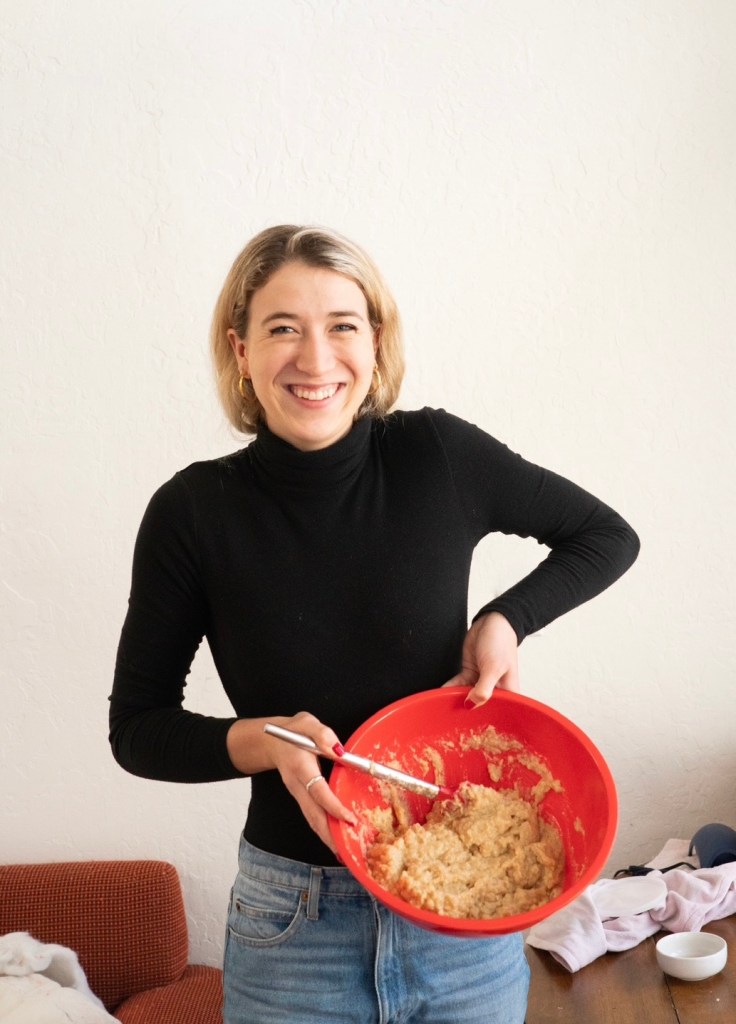
Charlotte Buck
Born and raised in North Carolina, Charlotte is a locally trained chef and food writer whose Southern roots inform her cooking style. Most recently, she trained at Michelin-starred restaurants in San Francisco. An avid forager, she aims to create place-based food that connects folks to both the land and each other. Charlotte is a graduate of the University of California at Berkeley and a Certified Specialist of Wine.
 Spoonful Suppers